
Does working with an independent agent automatically mean you’ll get better Medicare advice? Not necessarily. The key difference is how many insurance companies an agent can represent, not a guarantee that one type will make the right recommendation for you. If you’re asking what is the difference between a captive and independent agent, the answer can help you understand which plans an agent can compare.
In 2026, Medicare options and benefits can vary by location and change from year to year, so it helps to know which insurers an agent represents. A captive agent works with one insurer, while an independent agent can compare plans from multiple carriers they represent. This guide explains what that means for Medicare Advantage, Medicare Supplement, and Part D choices, along with useful questions about plan options and compensation. The Modern Medicare Agency is an independent brokerage that helps people compare plans from more than 40 carriers. The plans available to you depend on where you live. You’ll come away with a clearer way to discuss your needs and weigh your choices.
Key Takeaways
- Understanding what is the difference between a captive and independent agent can help you judge whether an agent’s range of choices matches your priorities.
- Independent agents can compare plans from the carriers they represent, but they don’t necessarily work with every insurer.
- A captive agent’s focused knowledge of one insurer’s products may suit you if you already prefer that company.
- When comparing Medicare options in 2026, weigh benefits, costs, doctors, and prescription needs. Plan options vary by location.
- Ask which carriers are represented, how options are compared, and why a recommendation fits your needs.
What is the difference between a captive and independent agent?
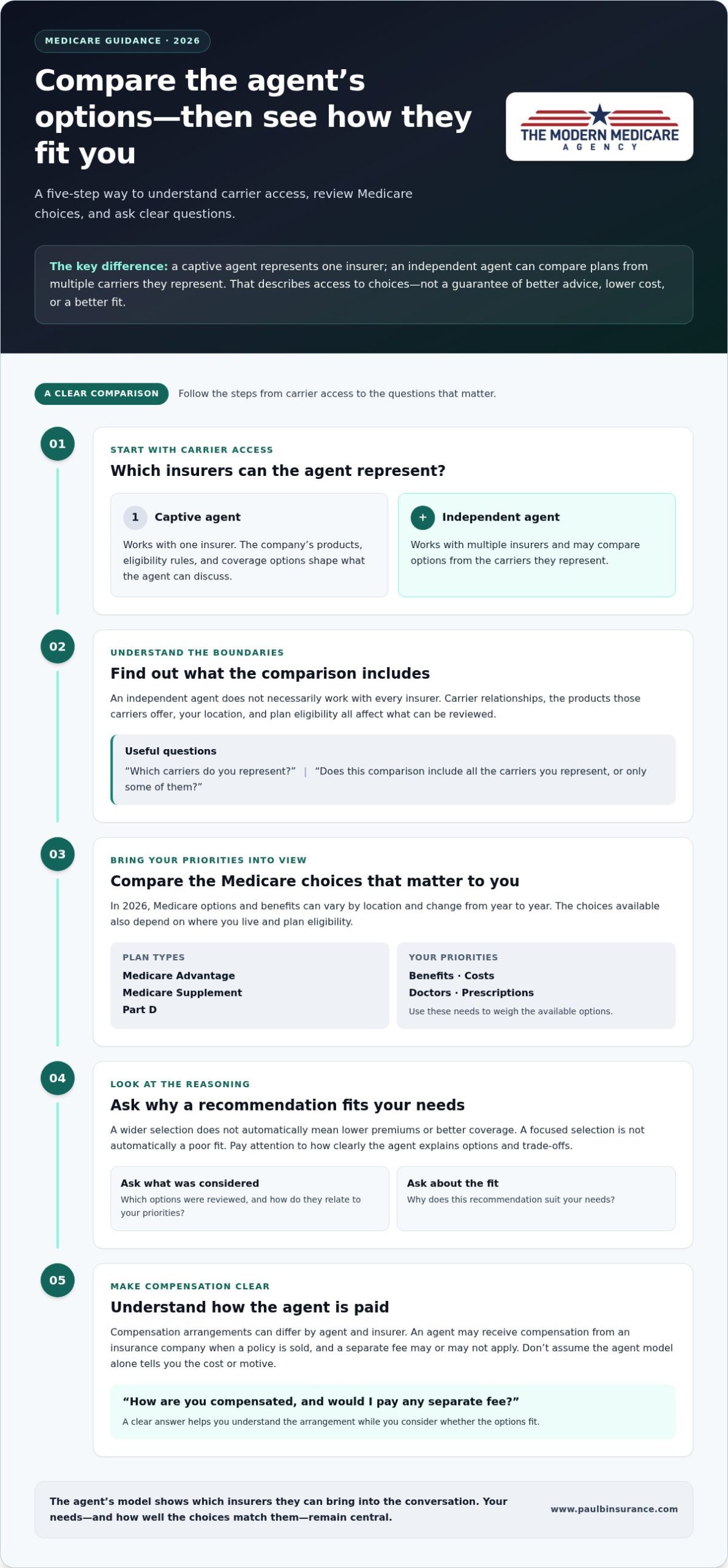
Insurance terminology can make an important choice feel harder than it needs to be. If you’re wondering what is the difference between a captive and independent agent, start with one question: which insurers can the agent represent? A captive agent represents one insurance company, or works in a relationship centered on a single carrier. An independent agent has relationships with multiple insurers and can compare options from those represented companies.
That distinction describes access, not the quality of the guidance. An independent agent doesn’t automatically offer a better fit, lower cost, or more suitable recommendation. A captive agent isn’t automatically limited in knowledge or service. The right choice depends on your needs, the available options, and how well those options match your priorities. For a basic overview of agent roles, see Understanding Insurance Agents.
What does a captive agent represent?
A captive agent primarily offers coverage from the insurer they represent. That company’s products, eligibility rules, and coverage options shape what the agent can discuss with you. For example, if you’re looking for a particular type of policy, the agent can explain what their insurer offers and whether you may qualify. They generally can’t present a competing insurer’s policy as an alternative. A focused relationship can be useful if you’re interested in that company, but it also sets a clear boundary around the choices available through the agent.
What does an independent agent represent?
An independent agent works with multiple insurers, so they may be able to compare options from different companies against the needs you describe. Think of it as looking at several menus instead of one. Each menu may offer different choices, but several menus still don’t show every dish in town. The agent’s carrier relationships, the products those carriers offer, and the plans available where you live all affect what can be reviewed. Ask which companies are included so you understand the scope of the comparison.
In practice, the distinction shapes the first set of options you see. A captive agent starts with one insurer’s offerings; an independent agent can draw from multiple represented carriers. Neither setup, by itself, tells you whether a particular policy suits your situation. Look at the choices available to you and how well they meet your needs.
Captive vs Independent Agents: Choice and Guidance
Carrier access can shape which options an agent is able to review with you. But a wider selection doesn’t automatically mean lower premiums or better coverage, and a focused selection isn’t automatically a poor fit. In 2026, the value of either model depends on the options available for your situation and how clearly the agent explains them.
| What to compare | Captive agent | Independent agent |
|---|---|---|
| Carrier access | Typically works with one insurer. | Can work with multiple represented insurers. |
| Product range | Based on the insurer’s offerings and eligibility rules. | Based on the products offered by represented carriers. |
| How options are reviewed | Explains options from that insurer. | May compare options across represented carriers. |
How can the available options differ?
A captive agent may have especially detailed knowledge of one insurer’s products. That can be helpful if the company’s offerings match what you’re looking for. An independent agent may be able to show how options from several represented carriers compare, giving you more than one company’s approach to consider. Still, those comparisons have limits. Carrier participation, your location, and plan eligibility all affect what’s available. The number of carriers alone doesn’t tell you whether a choice fits.
So, what is the difference between a captive and independent agent in practice? It’s the range of companies the agent can bring into the conversation, not a promise about the outcome. Neither model always leads to lower premiums or more suitable coverage. Ask which options were considered and how they relate to your needs. You can also ask whether the comparison includes all the carriers the agent represents or only a selection.
The label doesn’t settle questions about service, either. A thoughtful agent listens carefully, explains trade-offs, and makes space for your questions. A broad comparison may still be hard to use if the reasons behind a recommendation aren’t clear. Judge the guidance by how well it addresses your priorities, not by the agent’s business model alone.
What should you understand about agent compensation?
Compensation arrangements can differ by agent and insurer. An agent may receive compensation from an insurance company when a policy is sold, and a separate fee may or may not apply. Don’t assume that one model is automatically more expensive or that compensation proves an agent has a particular motive. Ask directly: “How are you compensated, and would I pay any separate fee?” A clear answer helps you understand the arrangement and focus on whether the options fit.
If you’re comparing Medicare coverage in 2026, personalized guidance can make the available choices easier to understand. Explore Medicare plan guidance as you consider what matters most to you.
Which agent model may fit your insurance needs?
The right model depends on what would make your decision clearer. Do you want one insurer’s products explained in depth, or would you feel more confident seeing options from several companies? Knowing what is the difference between a captive and independent agent can help you choose the kind of conversation you want, but it won’t determine which policy is right for you. Your needs, the available coverage, and the agent’s ability to explain trade-offs matter too.
When might a captive agent be a comfortable fit?
If you already have a particular insurer in mind, a captive agent can help you understand that company’s product range and how its options may align with your needs. A focused conversation can feel simpler if you don’t want to start with a broad comparison. Still, simplicity shouldn’t mean skipping the details. Before deciding, make sure you understand what the coverage includes, what it costs, any limitations, and whether you meet the insurer’s eligibility requirements.
When might an independent agent be useful?
An independent agent may be useful if you’d like to compare choices from several represented insurers rather than focus on one company. This can help you see differences in coverage and decide which trade-offs matter to you. The selection is shaped by the agent’s insurer relationships and the plans available where you live. Independence alone doesn’t prove that a recommendation is impartial or the best fit, so look for a clear explanation of how each option addresses your priorities.
Try matching the agent model to what you want from the process:
- You have a preferred insurer: A captive agent may offer a focused explanation of that company’s products.
- You want to compare companies: An independent agent may be able to review options from multiple represented carriers.
- You feel overwhelmed by choices: Either model can work if the agent listens, explains terms plainly, and gives you room to weigh the decision.
For Medicare, compare plan details with your needs and location. In 2026, available carriers, plans, and benefits can vary by area. If you’re considering Medicare Advantage, compare benefits and costs, then check how the plan’s provider access and services fit your needs. A guide to Medicare Advantage plans can help you understand what to review.
Before you move forward, consider whether the agent has explained both what a policy does and what it doesn’t do. A useful recommendation connects the available options to your priorities instead of simply presenting a choice. Choose the conversation that helps you understand the decision and feel comfortable with your next step.
What does the difference mean when comparing Medicare plans?
For Medicare shoppers, an agent’s carrier relationships affect which plans they can present. Your decision should rest on how well the available coverage matches your needs. Compare benefits, costs, access to doctors and other providers, and prescription coverage together. A plan that looks appealing in one area may not suit you in another.
In 2026, plan and carrier availability can vary by location. An independent agent can compare options from represented carriers, but may not show every plan available in your area. A captive agent can explain plans from the insurer they represent. Either way, the comparison should reflect where you live and what matters to you, rather than relying on a general description of a plan.
How can carrier access affect Medicare Advantage comparisons?
Medicare Advantage plans are offered by private insurers, and an agent can compare only the plans available through the carriers they represent. As you review options, consider how the plan’s benefits and costs work alongside provider access and prescription coverage. Your preferred doctors and medications can help you evaluate whether a plan fits your daily needs. For additional context on the factors to review, explore this Medicare Advantage plan guide.
Take time to review the plan details that matter most to you. Availability and benefits can differ by area, so a comparison from another location may not reflect the choices available where you live in 2026. A clear explanation of the options helps you see what’s included and what questions still need answers.
How does representation matter for Medigap and Part D?
Medicare coverage decisions may involve more than one choice. Medigap is supplemental coverage that works alongside Original Medicare, while Part D provides prescription drug coverage. These are distinct from an agent’s carrier representation: a carrier relationship describes which companies the agent can represent, not which type of Medicare coverage you need. Learn about Medigap coverage basics and review the Medicare Part D guide as you consider how each type of coverage relates to your needs.
Rather than treating the decision as one bundled choice, consider each coverage need separately and how the pieces work together. Compare relevant details for your location and circumstances. Specific premiums, benefits, and enrollment considerations can depend on the plan and your situation, so don’t assume a detail from another year or area applies to you in 2026.
If you’d like personal help understanding Medicare options, get guidance comparing Medicare plans based on your priorities and location.
How can you choose an agent and move forward with confidence?
Choosing an agent doesn’t have to mean guessing which label is better. Focus on what you need, which choices the agent can show you, and whether the guidance makes sense for your situation. In 2026, Medicare plans and carriers can vary by location, so make sure the comparison reflects where you live and the coverage options available there.
Use these steps to make the conversation more useful:
- 1. Identify your needs. Make a short list of priorities, such as keeping access to certain providers, covering prescriptions, or understanding your expected plan costs.
- 2. Ask about represented carriers. Find out which insurers and plan types the agent can discuss in your area. An independent agent can compare plans from represented carriers, not necessarily every insurer.
- 3. Compare options against your priorities. Ask how each recommendation relates to your providers, prescriptions, and other needs. A helpful explanation should make clear why an option may fit and what trade-offs to consider.
- 4. Review ongoing support. Ask what help is available after enrollment, including how you can get answers to questions that come up during the year.
What questions can help you understand an agent’s role?
Clear questions can help you understand both the choices in front of you and the limits of the comparison. You might ask: “Which insurers and plan types do you represent where I live?” “How did you match this option to my prescriptions and providers?” “How are you compensated, and would I pay a separate fee?” Also ask what support is available after enrollment. These are reasonable questions, not accusations. The answers help you understand how the guidance works and decide whether you feel informed.
How can an independent Medicare agency support your decision?
An independent Medicare agency can compare plans from the carriers it represents and explain how those options relate to your stated priorities. The Modern Medicare Agency serves clients across more than 34 states and offers personalized, unbiased guidance. Its agents help people compare and select Medicare Advantage, Medigap, and Part D plans from over 40 carriers. Year-round support can also help you get guidance when questions arise after enrollment.
Understanding what is the difference between a captive and independent agent is a useful starting point, but a confident decision also depends on clear answers and a comparison tailored to your needs. If you want help understanding Medicare choices, explore personalized Medicare plan guidance and take the next step with more confidence.
Take the next step toward a clearer Medicare choice
Your next step can be simple: write down what matters most to you before reviewing Medicare options. Think about the doctors you want to see, prescriptions you take, and the kind of coverage that feels manageable for your needs. Bring those priorities into the conversation so the guidance stays centered on your life, not just on plan descriptions.
Understanding what is the difference between a captive and independent agent gives you a useful starting point. From there, focus on whether the available choices are explained clearly and whether you feel comfortable asking questions. Take the time you need to understand your options and make a decision that feels right for you in 2026.
Get personal help comparing Medicare options with guidance shaped around your priorities. The Modern Medicare Agency can help you compare plans and understand your choices, one step at a time.
Frequently Asked Questions
Is an independent agent always better than a captive agent?
No. The answer to what is the difference between a captive and independent agent is about the agent’s access to insurers, not a rating of their skill or the quality of their advice. An independent agent may offer more companies to compare, while a captive agent may know one insurer’s coverage in depth. Focus on whether the agent listens, explains trade-offs clearly, and helps you make a decision that fits your priorities.
Can an independent agent show me plans from every insurance company?
No. An independent agent can present options from the insurers they represent, but that doesn’t necessarily include every company. For Medicare plans in 2026, choices can also depend on your location. To understand the scope of a comparison, ask which insurers the agent represents in your area and whether the options being reviewed include the plan types you’re considering. That gives you a clearer picture of what the agent can show you.
Does it cost more to use an independent insurance agent?
Not necessarily. The agent’s independent status alone doesn’t tell you whether you’ll pay a separate fee. Compensation arrangements can differ, so ask plainly how the agent is paid and whether any fee applies to your situation. You can also ask whether compensation varies among the options being discussed. A straightforward explanation helps you understand the arrangement without assuming that a particular agent model means higher costs or a biased recommendation.
Can a captive agent help me compare Medicare plans?
Yes, a captive agent can explain and compare Medicare options offered by the insurer they represent. That may help you understand differences among that company’s available choices, but it won’t provide a comparison with plans from other insurers. If you already have a preferred company, ask the agent to explain how its options relate to your needs. For a broader review, clarify which other carriers, if any, the agent can represent.
How do I know whether an agent is independent?
Ask the agent directly which insurers they represent and whether they can show options from more than one company. Signage or business materials featuring one insurer’s name may offer a clue, but asking is clearer. You can also request the names of the carriers included in the discussion. The important thing is to understand the agent’s actual reach, since “independent” doesn’t mean they work with every insurer.
What happens if I want help after enrolling in a Medicare plan?
Ask about post-enrollment support before choosing a plan. Find out how to raise questions about your coverage, who will respond, and whether help is available if your needs change during the year. Also clarify which questions the agent can help explain and which may need to go to the insurer. Knowing the support process in advance can make it easier to get oriented if something about your plan is unclear.

Article by
Paul Barrett
Paul Barrett, CMIP is the founder of The Modern Medicare Agency, an independent Medicare-only brokerage based in Melville, NY. With 18 years of Medicare-exclusive experience, a CMIP designation, and more than 5,000 clients served across 37 states, Paul is one of the most credentialed independent Medicare specialists on Long Island — and one of the most direct.
He represents 40+ carriers with no quotas and no allegiances, which means his recommendations are based entirely on what fits each client's specific situation. He is the author of Medicare Mastery Unlocked and host of the Wise Guys Retirement Talk podcast. His content is grounded in primary sources, real carrier intelligence, and 18 years of watching what happens when people get Medicare right — and when they don't.
📞 631-358-5793 | paulbinsurance.com