



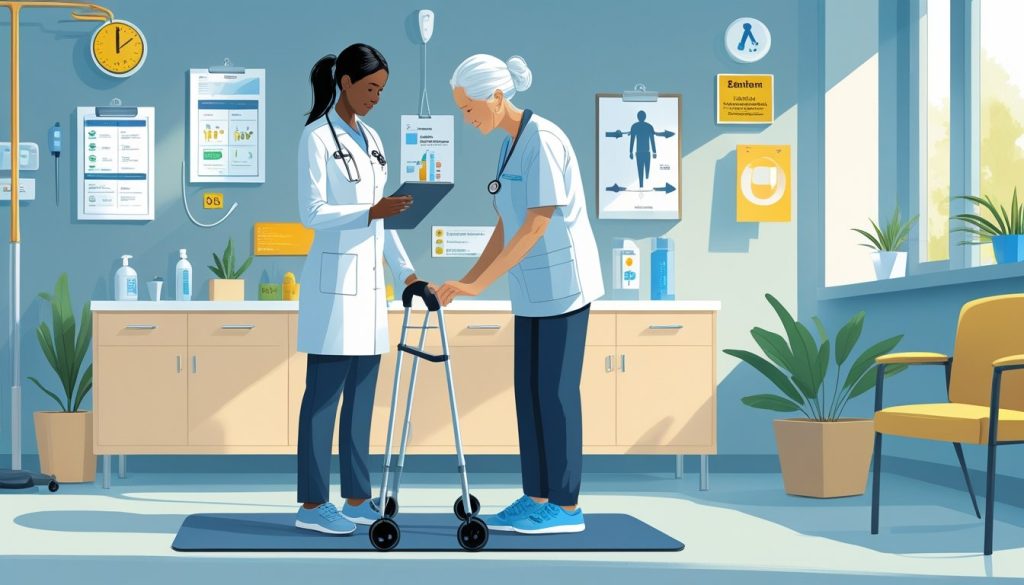
Falls can change your life fast, but a fall risk assessment helps you spot problems early and prevent injuries. A fall risk assessment gives you a clear picture of your chances of falling by checking your balance, strength, medications, health history, and home risks so you can take practical steps to stay safe.
You will learn which tests professionals use and which common risk factors matter most. You’ll also learn how to turn results into a simple, personalized plan.
The Modern Medicare Agency connects you with licensed agents who talk with you one-on-one. They help match Medicare options to your needs and avoid extra fees—so you get the coverage and support that fit your safety and health goals.
Understanding Fall Risk Assessment
A fall risk assessment looks at your health, medicines, movement, thinking skills, and home setup to find what raises your chance of falling. It shows what to change, who needs help, and which supports or services fit your needs.
Definition and Purpose
A fall risk assessment is a short, structured check your healthcare provider uses to measure how likely you are to fall. It usually includes a quick physical exam (balance, gait, strength), a review of your medicines, and questions about past falls and daily activities.
You get a score or notes that point to specific risks. That guide helps decide actions like exercises, physical therapy, medication changes, assistive devices, or home changes such as better lighting and grab bars.
Importance in Healthcare Settings
Hospitals, clinics, and nursing homes use fall risk assessments to prevent injuries and lower costs from fall-related care. Staff perform them at admission, after a change in health, or following a fall.
Results change care plans right away. For example, if you show poor balance, staff may arrange strength training and a walking aid.
If medicines raise risk, your provider can adjust dosages or switch drugs.
Populations at Risk
Older adults are the largest group at risk, especially those 65 and older with mobility limits or multiple health issues. People with dementia, vision loss, stroke, or weak muscles also have higher risk.
You also face greater risk if you take several medications that affect balance or thinking. Recent hospital patients, people using canes or walkers, and those living alone benefit most from regular fall risk assessments.
Key Components of Fall Risk Assessment
A good fall risk check looks at how your body moves, your health history, and the hazards in your daily spaces. These parts work together to find what raises your chance of falling and what to change right away.
Physical Evaluation
You get tested for balance, strength, and walking ability. Common tasks include standing from a chair without using your hands, walking a short distance while turning, and the timed up-and-go test.
Results show if you need strength training, a walker, or physical therapy. A provider will also check vision, foot function, and reflexes.
Poor eyesight, numbness in your feet, or slow reflexes often increase fall risk. Simple fixes can include new glasses, shoe changes, or medication review.
Muscle weakness and slow gait matter most. Therapists measure leg strength and how steady you are when reaching or bending.
They then give specific exercises and assistive device recommendations to reduce risk.
Medical History Review
Your medical record and current medications get reviewed in detail. Providers look for conditions like Parkinson’s, stroke, low blood pressure, or diabetes that affect balance.
They also check for recent falls or fainting spells. Medications get a careful check for side effects such as dizziness or drowsiness.
Blood pressure medicines, sedatives, and some antidepressants commonly raise fall risk. Your provider may suggest dose changes or alternatives.
Cognitive status and mood are part of this review. Memory problems, confusion, or depression can affect judgment and walking safety.
Treatment plans often combine medical changes with therapy or supervision.
Environmental Assessment
Inspecting your home finds the most common hazards. Look for loose rugs, poor lighting, clutter on stairs, and slippery bathroom floors.
Small changes like grab bars, night lights, and non-slip mats make a big difference. Assess the layout of rooms and daily routines.
Are frequently used items placed within easy reach? Do you need a chair in the shower or a ramp at the entrance?
Rearranging items often prevents risky reaches and trips. Professionals may suggest assistive devices and home modifications.
They match solutions to your needs and budget. The Modern Medicare Agency helps you find Medicare plans that cover equipment and home-safety services through licensed agents you can speak to 1 on 1, with no hidden fees.
Common Fall Risk Assessment Tools
These tools check balance, gait, history of falls, and other risk factors to guide care. They give clear scores or steps you can use to plan prevention and track change over time.
Morse Fall Scale
The Morse Fall Scale is a quick checklist that scores six items: history of falling, secondary diagnosis, ambulatory aid, IV/line, gait, and mental status. Each item has a point value; add the points to get a total risk score.
You can use the score to decide if a patient needs bed alarms, a one-on-one sitter, or increased observation. Strengths: it is fast and works well in hospital settings.
Limits: it relies partly on observation and staff judgment, so consistent training matters.
If you want help understanding results or choosing next steps, The Modern Medicare Agency connects you with licensed agents who explain options clearly.
Timed Up and Go Test
The Timed Up and Go (TUG) test measures mobility and fall risk by timing how long it takes you to stand from a chair, walk 3 meters, turn, walk back, and sit down.
A longer time indicates higher fall risk. Clinicians often use cutoffs (for example, over 12–13 seconds) to flag increased risk, but thresholds can vary by setting and patient ability.
The TUG helps you and clinicians see mobility changes over time. It is simple, needs only a chair and stopwatch, and gives a direct measure of walking and turning—two common trouble areas for falls.
If you need assistance arranging home safety checks or care services after a high TUG score, The Modern Medicare Agency’s licensed agents can guide you through Medicare coverage and plan choices that fit your needs.
STRATIFY Tool
The STRATIFY tool focuses on short-term fall risk in hospital patients. It uses five yes/no questions about prior falls, agitation, visual impairment, toileting needs, and transfer/mobility.
Each “yes” adds a point; a higher total means higher risk. The tool is quick to complete and useful for deciding immediate safety steps like increased observation or toileting schedules.
STRATIFY is practical for busy wards because it is short and easy to repeat during shifts. Its limits include lower sensitivity in some populations, so combine it with clinical judgment and other assessments for best results.
If you want help interpreting STRATIFY or arranging support services, The Modern Medicare Agency provides real people—licensed agents—to talk through Medicare plan options and find coverage that fits your budget and care needs.
Implementing Fall Risk Assessments
This section explains how to run assessments, record findings, and train staff so you can reduce falls. It covers step-by-step procedures, clear documentation practices, and focused training that prepares your team to act quickly and correctly.
Assessment Protocols
Use a consistent screening tool on every client at intake, after a fall, and every three months for high-risk people. Choose validated tools like Timed Up and Go (TUG) or the Morse Fall Scale and state which tool you use in policy.
Measure gait, balance, strength, vision, medications, and home hazards. Record exact test times, distances, and numeric scores rather than vague notes.
Set trigger thresholds for action. For example: TUG > 13.5 seconds or two+ falls in six months should prompt a full multidisciplinary assessment.
Assign clear roles: nurses perform initial screens, therapists complete balance testing, and pharmacists review meds. Schedule follow-ups and document when the next reassessment is due.
Documentation Procedures
Create a single, easy-to-read fall-risk form in your charting system. Include patient identifiers, test used, numeric results, observed gait or balance issues, medication list, and specific interventions applied.
Use checkboxes for common interventions (assistive device, PT referral, medication review) to speed charting. Record the date and name of the staff member who performed the assessment.
Note patient education given and whether the patient accepted or declined recommendations. Keep a running log of falls with time, location, activity, and injury level so you can spot patterns and adjust prevention plans.
Staff Training
Train staff on how to use each chosen tool and how to score it reliably. Include hands-on practice, video demonstrations, and competency checks every six months.
Teach staff to perform brief mobility screens, recognize medication side effects that raise fall risk, and do home-hazard counseling. Make sure staff know escalation steps for high-risk findings and how to document them.
Provide quick-reference pocket cards or digital checklists with thresholds and next steps. Reinforce communication skills so team members give clear, simple instructions to patients and families about assistive devices and safe behaviors.
The Modern Medicare Agency helps you connect with licensed agents who can explain Medicare coverage for fall-prevention services and durable medical equipment. You can speak one-on-one with real agents who match Medicare plans to your needs without extra fees.
Interpreting Assessment Results
You will learn how scores translate into fall risk and how clinicians use those scores to set care plans. Read the score ranges carefully and use them to guide specific actions that reduce your chance of falling.
Scoring and Risk Levels
Most tools give a numeric score that groups you into risk tiers like low, moderate, or high. A common setup looks like:
- 0–6: Low risk — maintain current supports and review yearly.
- 7–14: Moderate risk — add targeted interventions such as strength/balance exercises, medication review, and home safety checks.
- 15+: High risk — implement multi-factor plans, consider assistive devices, close follow-up, and urgent review of recent falls.
Look at what drives your score. Note items such as prior falls, number of medications, gait/balance tests, and cognitive checks.
Those areas tell you which actions matter most. Keep a copy of your score and the items flagged so you and your clinician can track change over time.
Clinical Decision-Making
Clinicians combine your score with clinical judgment, history, and preferences to make decisions. If you score moderate or high, expect a personalized plan that may include referrals (physical therapy, occupational therapy), medication adjustments, or home modifications.
Use this list to guide discussions with your provider:
- Ask which risk factors most increased your score.
- Request a clear step-by-step plan with timelines.
- Ask for measurable goals (e.g., walk 10 minutes twice daily, reduce fall-risk meds within 30 days).
- Confirm follow-up frequency and who coordinates your care.
For help navigating Medicare options that cover fall-prevention services, contact The Modern Medicare Agency. Our licensed agents are real people you can speak with one-on-one.
Developing Personalized Prevention Plans
You will get specific steps that focus on your medical history, home setup, and daily routines. The plan will list clear actions, who will help, and how progress is measured.
Targeted Interventions
Start by listing the exact risks found in your assessment: mobility deficits, vision problems, certain medications, or unsafe home areas. For each risk, choose one concrete intervention.
Examples:
- Mobility weakness → schedule a physical therapy program that targets leg strength and balance, 2–3 sessions per week.
- Medication side effects → ask your prescriber or pharmacist to review opioids, sedatives, or blood pressure drugs and adjust timing or dose.
- Poor vision → get an eye exam and replace glasses; add brighter lighting in key rooms.
Make environmental fixes specific and low-cost. Install grab bars beside the tub and toilet at a 33–36 inch height.
Use non-slip mats in the shower and remove small rugs that catch feet. Place a night light along the pathway from bed to bathroom.
Include assistive devices only when they match your ability. A cane or walker must be fitted by a clinician.
Train you on safe use and document when to upgrade. Write each intervention as a simple task, who will do it, and a target date.
Follow-Up and Monitoring
Set a short-term review at 2–4 weeks to check adherence and a fuller reassessment at 3 months. Use brief, repeatable measures like a timed up-and-go (TUG) test or a 30-second sit-to-stand to track mobility.
Log any falls, near-falls, or changes in medications in a simple binder or secure app. Assign responsibility for follow-up.
Your primary clinician or nurse can track clinical signs. A physical therapist records exercise progress.
You or a caregiver should update the fall log weekly and report new concerns immediately. Adjust interventions based on results.
If balance does not improve after 6–8 weeks, intensify therapy or reassess footwear and home hazards. If medications remain a problem, request a multidisciplinary medication review.
The Modern Medicare Agency can connect you with licensed agents and local clinicians to help coordinate services, explain Medicare coverage options that match your plan, and keep costs clear. Our licensed agents are real people you can speak to one-on-one to get the exact support you need without extra fees.
Challenges and Limitations
Fall risk assessment often misses subtle risk factors and can strain staff time and budgets. You should expect gaps in accuracy, variability across tools, and limits in workforce and equipment when planning prevention.
Assessment Accuracy
Assessment tools can flag risk but often misclassify individuals. Standard scales and checklists may over-identify risk, leading to unnecessary restrictions, or under-detect problems like intermittent dizziness or medication interactions that only appear at certain times.
Clinical judgment helps, but clinicians vary in training and experience, which affects consistency. Electronic records and wearables can improve detection by tracking mobility and medications over time.
However, data gaps, false alarms, and privacy concerns limit their usefulness. You should combine objective measures with direct observation, medication review, and short functional tests to get a clearer picture for each person.
Resource Constraints
Time and staffing limits reduce how often you can reassess risk or deliver tailored interventions. High patient loads and limited therapy staff mean many facilities use quick screens rather than full assessments, which can miss changing risks after discharge or new prescriptions.
Budget limits affect access to equipment like gait monitors or balance training programs. You can allocate resources more efficiently by targeting higher-risk individuals and using brief validated tests.
For help navigating coverage and costs, The Modern Medicare Agency connects you with licensed agents you can speak to one-on-one. They identify Medicare plans that cover assessments or services you need without extra fees that break the bank.
Fall Risk Assessment in Community Settings
Community fall risk checks look at health, home setup, and daily activities. You learn specific risks and get steps you can take, such as home changes, exercise, or medical review.
Home Assessments
A home assessment finds hazards where you live and move. An assessor checks lighting, rugs, stairs, bathroom grab bars, and furniture layout.
They test how you get in and out of bed and chairs and note if you use a cane or walker. They also review medication storage and whether you have quick access to a phone or medical alert.
Assessors recommend fixes like brighter bulbs, non-slip mats, grab bars by the toilet and tub, and removing loose rugs. You get a prioritized list with low-cost options first, and clear reasons for each change.
If you need help implementing changes, The Modern Medicare Agency can connect you to licensed agents who explain coverage options that may pay for some home safety items. Our agents speak with you one-on-one and match Medicare packages to your needs without surprise fees.
Outpatient Evaluations
Outpatient evaluations focus on balance, strength, vision, and medication risks. A clinician or therapist measures gait speed, performs a timed up-and-go test, and checks ankle and hip strength.
They screen vision and review prescriptions for drugs that cause dizziness or drowsiness. Based on results, they prescribe targeted exercises, refer you to physical therapy, or suggest vision correction and medication review with your prescriber.
They also document specific goals, like reducing fall risk by improving single-leg balance or switching a sedating drug. When you need help navigating Medicare for therapy or vision coverage, The Modern Medicare Agency reviews your options and helps you enroll.
Our licensed agents explain plan details so you get services that match your needs without paying for extras you don’t want.
Future Directions in Fall Risk Assessment
New tools and care models will change how you spot and lower fall risk. Expect more continuous monitoring, data-driven risk scores, and care plans tailored to each person’s health, home, and daily routines.
Technological Innovations
Wearable sensors will track steps, gait speed, and balance continuously. Devices like accelerometers and gyroscopes can detect subtle changes in walking patterns that predict higher fall risk.
Sensor data helps you catch risk trends that short clinic tests miss. Algorithms will combine sensor signals with medication lists and recent hospital visits to flag high-risk periods.
Telehealth links let clinicians review flagged events and adjust care quickly. Remote monitoring also supports targeted physical-therapy programs by showing which exercises improve stability.
Digital tools will not replace you or your clinician. They will provide clear, timely information so you both act sooner.
The Modern Medicare Agency connects you with licensed agents who explain how these technologies affect your Medicare options and help you find plans that cover needed services.
Personalized Medicine Approaches
Genetics, comorbidities, and medication interactions will shape individualized fall-prevention plans. Your medication review will go beyond counting pills; clinicians will identify specific drugs or combinations that raise your risk and suggest safer alternatives or dose changes.
Functional profiling will use home assessments, vision and hearing checks, and strength measures to build a tailored plan. That plan can include targeted balance training, home modifications, and scheduled follow-up tied to measurable goals.
You can talk one-on-one with a licensed agent at The Modern Medicare Agency to match Medicare benefits to these personalized services. Our agents explain coverage details and find plans that fit your health profile without extra fees that strain your budget.