




What if leaving Medicare Advantage doesn’t mean you’ve lost your chance to get Medigap? In 2026, the medigap trial right period may give you a limited path back to Original Medicare and an opportunity to apply for a Medigap policy, but only if your enrollment history fits a qualifying situation. It isn’t a general switching window, and the dates matter.
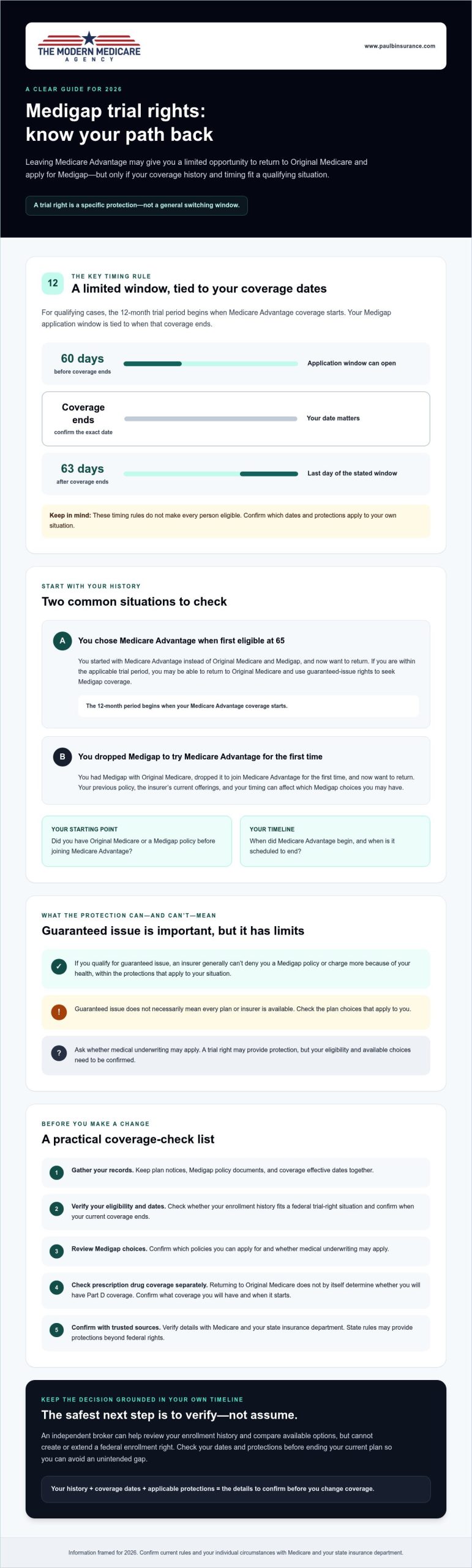
It’s understandable to feel unsure. A trial right differs from other Medicare enrollment rights, and missing a deadline could affect your guaranteed-issue protection. In qualifying cases, the 12-month period begins when Medicare Advantage coverage starts. You can apply for Medigap as early as 60 days before that coverage ends, and no later than 63 days afterward.
This guide explains which trial-right situations may apply, what coverage and application details to check before making a change, and how to avoid an unintended gap. You’ll also learn what to confirm about medical underwriting and where to find help comparing options, including state-specific protections that may apply in 2026.
Key Takeaways
- Your starting point matters: review whether you had Original Medicare or a Medigap policy before joining Medicare Advantage to see which trial-right situation may fit.
- The medigap trial right period is a specific protection, not a general opportunity to switch. Confirm your eligibility and the dates that apply to your situation.
- A trial right may provide guaranteed-issue protections, but it doesn’t mean every Medigap policy is automatically available. Check plan options and whether medical underwriting may apply.
- Gather plan notices, policy documents, and coverage effective dates before acting. Then verify your next steps with Medicare and your state insurance department.
- An independent broker can help review your enrollment history and compare available options, but can’t create or extend a federal enrollment right.
What Is the Medigap Trial Right Period, and Who Might Qualify?
Switching coverage can feel risky when you’re unsure whether your enrollment history qualifies or how much time you have to act. The medigap trial right period may offer a way back to Original Medicare and an opportunity to apply for Medigap, but it applies only in specific situations. Your previous coverage and the dates your plans started and ended matter.
Medigap, also called Medicare Supplement Insurance, helps cover certain costs under Original Medicare. A trial right is a limited protection for people who try Medicare Advantage in qualifying circumstances and then decide to return to Original Medicare. It isn’t an anytime right to buy any Medigap policy. Before changing coverage in 2026, compare your circumstances with current guidance at Medicare.gov and ask your state insurance department about any additional protections.
How a trial right differs from a regular enrollment period
A regular enrollment period lets you make certain Medicare coverage changes during set times. A trial right is different: it depends on how you first joined Medicare Advantage and what coverage you had before. If you qualify for guaranteed issue, an insurer generally can’t deny you a Medigap policy or charge more because of your health, within the protections that apply to your situation. That doesn’t necessarily mean every plan or insurer is available, so confirm your options before you disenroll.
The two situations to check first
Medicare.gov describes two common federal trial-right situations. Review your coverage timeline to see whether either may fit:
- You joined Medicare Advantage when you first became eligible at age 65. If you’re still within the applicable trial period, you may be able to leave the plan, return to Original Medicare, and use guaranteed-issue rights to seek Medigap coverage.
- You had Medigap, dropped it to join Medicare Advantage for the first time, and want to return. Your prior policy, the insurer’s current offerings, and your timing can affect which Medigap choices you may have.
Keep your plan notices and policy records handy. The date Medicare Advantage coverage began, whether you had Medigap before joining, and whether this was your first time trying Medicare Advantage can all affect the answer. State rules may provide protections beyond federal rights, so confirm what applies where you live. You can also review the agency’s information about Medigap plan options as you prepare questions. A plan comparison can help you understand available choices, but it can’t confirm or create an enrollment right.
How the Medigap Trial Right Period Works in Each Situation
Your starting point helps determine which trial-right rules to check. In 2026, federal guidance describes two common paths: joining Medicare Advantage when first eligible for Medicare at 65, or leaving a Medigap policy to try Medicare Advantage for the first time. Neither path applies automatically to everyone. Your previous coverage and the dates it began and ended matter.
If you chose Medicare Advantage when first eligible
Sequence: You became eligible for Medicare at 65, chose Medicare Advantage instead of starting with Original Medicare and Medigap, and now want to return to Original Medicare. Under the federal trial right, the 12-month period begins when your Medicare Advantage coverage starts. If you leave during that period, you may have guaranteed-issue rights to buy Medigap, subject to the rules that apply to you.
Before changing coverage, confirm when your Medicare Advantage plan ends, which Medigap policies you can apply for, and whether your circumstances meet the federal requirements. The application window can begin 60 days before your Medicare Advantage coverage ends and run through 63 days after it ends. Check the official Medicare rules for your situation, and verify details with Medicare or your state insurance department.
Review prescription drug coverage separately. Returning to Original Medicare doesn’t by itself determine whether you’ll have Part D coverage. Confirm what coverage you’ll have and when it starts before ending your current plan.
If you dropped Medigap to try Medicare Advantage
Sequence: You had a Medigap policy alongside Original Medicare, dropped it to join Medicare Advantage for the first time, and now want to return. Your previous policy and whether this was your first Medicare Advantage enrollment are central to the review. If you qualify, you may be able to get your former policy back if it’s still offered, or have a protected opportunity to apply for another Medigap policy.
Don’t assume every plan letter or insurer is available. Confirm which policies you can apply for under current federal and state rules, including any rules related to when you first became eligible for Medicare. The 12-month trial period is measured from the start of Medicare Advantage coverage, while the application window is tied to when that coverage ends. Verify your specific dates before acting.
Gather your old Medigap policy, Medicare Advantage enrollment notice, and coverage effective dates. The medigap trial right period can depend on details that are easy to overlook. An independent comparison of available Medigap options may help you understand your choices, but it can’t confirm or extend an enrollment right.
Trial Rights, Guaranteed Issue, and Medical Underwriting: What Changes?
Concerned that a health condition could affect your ability to get Medigap? A possible trial right may give you a protected way to apply, but it doesn’t make every policy or insurer automatically available. Your situation, state rules, and when you first became eligible for Medicare can all affect which protections apply in 2026.
| Term | What it means | What to confirm |
|---|---|---|
| Trial right | A limited federal protection that may let someone in a qualifying situation return to Original Medicare and apply for Medigap. | Whether your enrollment history qualifies and which dates govern your application. |
| Guaranteed issue | When it applies, it limits an insurer’s ability to deny certain Medigap applications or base access on your health. | Which policies are protected and the application period for your specific situation. |
| Medical underwriting | A health review an insurer may use when guaranteed-issue or other protections don’t apply. | Whether underwriting applies before you leave your current coverage, and what it could mean for your application. |
What guaranteed issue may mean for your application
Guaranteed issue can reduce the risk that certain health conditions will prevent you from applying for a protected Medigap option. The precise right depends on the qualifying event. It doesn’t promise acceptance into any plan you choose, a specific premium, or access to every plan letter. The importance of guaranteed issue protections is especially clear for people who might otherwise face health screening.
Before acting, check current Medicare guidance and your state insurance department’s rules. Ask which policies are available under your right, whether your eligibility date affects the options, and when to apply. The medigap trial right period is one possible route to protected access, not a blanket exception to underwriting.
Why Medicare Advantage and Medigap are not interchangeable
Original Medicare is the coverage that Medigap supplements. Medicare Advantage is a separate way to receive Medicare benefits, and Medigap generally can’t be used to pay its costs. Returning to Original Medicare and finding a Medigap policy are related steps, but they’re not the same decision. For an overview of Medigap coverage, compare how the policy works with Original Medicare before choosing your next move.
Review prescription drug coverage separately. A Medigap policy doesn’t replace Part D coverage. Understanding how the coverage types fit together can help you ask focused questions and avoid assuming that one change automatically settles the others.
What to Do Before Your Medigap Trial Right Period Ends
It’s easier to make a careful choice when you have your records and dates in front of you. In 2026, check whether a trial right applies before you feel rushed. Use this checklist to organize your next steps, then confirm the rules for your situation with Medicare and your state insurance department.
Gather the details that determine your options
- Collect your paperwork. Find Medicare and plan notices, your current or former Medigap policy, and records of Medicare Advantage enrollment.
- Write down the dates. Note when you first became eligible for Medicare and the effective and end dates for each relevant plan. These dates can help determine whether a trial right may apply and when you need to act.
- Confirm what documentation is needed. Ask Medicare, your state insurance department, and any insurer involved which records they need to review eligibility and application timing.
- Verify the deadline and available policies. For the federal trial-right situations described by Medicare, the application window can begin 60 days before Medicare Advantage coverage ends and run through 63 days afterward. Confirm the deadline that applies to you and which Medigap policies may be available.
Don’t rely on a general enrollment calendar or a verbal estimate alone. Your qualifying event and coverage dates matter. Keep notes of whom you contacted and what they confirmed.
Compare coverage before submitting a change
Before deciding, check how each option fits your day-to-day care. Review provider access, prescription coverage, and your potential out-of-pocket exposure. If you return to Original Medicare, confirm whether you’ll need separate Part D coverage for prescriptions and when that coverage would begin.
Ask how to apply for Medigap, what protections apply to your circumstances, and how the policy’s benefits and costs compare with your current coverage. You can review Medigap plan information as part of that comparison. Don’t cancel or change coverage until you understand the application steps and effective dates involved.
You don’t have to make the decision alone or at the last minute. An independent broker can review your current coverage, enrollment history, and available plan choices, but can’t create or extend an enrollment right. Get help reviewing your Medicare coverage options early enough to ask questions and compare choices without rushing.
Get Personal Help Reviewing Your Medigap Trial Right Options
It can be hard to judge your next step when the answer depends on your coverage history and exact dates. An independent Medicare broker can help you organize the details, review your current coverage, and compare plan choices available in 2026. That guidance can make the medigap trial right period easier to assess, but a broker can’t create or extend a federal enrollment right. Eligibility and policy issuance depend on the rules that apply to you and the insurer’s process.
What to bring to a Medicare coverage review
A few records can make the conversation more useful. Gather your current Medicare Advantage plan details and any current or former Medigap policy information. Bring enrollment notices and write down the dates each plan began or ended. If you’re unsure about a date, mark it as unconfirmed rather than guessing.
Also make a short list of what matters most to you, such as doctors you want to keep seeing, prescriptions you take, and concerns about coverage or out-of-pocket costs. These details help frame a comparison. They don’t determine whether you qualify for a trial right, so confirm eligibility and deadlines with Medicare and your state insurance department.
How an independent broker can help you compare
The Modern Medicare Agency is an independent brokerage representing plans from over 40 carriers, with personalized guidance and year-round support across more than 34 states. Comparing options from multiple carriers can help you see which policies may be available and how their coverage differs. You can also review general Medigap plan information as you prepare questions.
A comparison helps you understand your choices, but it doesn’t guarantee that you qualify for a protected enrollment period or that a particular insurer will issue a policy. Ask what needs to be confirmed with official sources, what application steps may apply, and how to avoid a gap between coverage dates. Make sure you understand the answers before deciding.
If you’d like help reviewing your current coverage, enrollment history, and 2026 options, you can discuss your situation with an independent Medicare broker. Bring the documents you have, ask about anything that remains unclear, and verify your next steps with Medicare or your state insurance department before making a coverage change.
Take Your Next Step With Confidence
The medigap trial right period is a limited protection, not an anytime opportunity to switch. Your enrollment history and coverage dates help determine whether it may apply, while guaranteed-issue rights don’t automatically mean every policy or insurer is available.
Before changing coverage in 2026, confirm your eligibility, deadlines, and Medigap options with Medicare and your state insurance department. Review how your doctors, prescriptions, and potential out-of-pocket costs may fit with the coverage you’re considering. Checking these details can help you make your next move with fewer surprises.
If you’d like help reviewing your current plan, enrollment history, and available choices, The Modern Medicare Agency is an independent brokerage that compares plans from over 40 carriers and provides personalized guidance and year-round support across more than 34 states. A review can help clarify your options, but it can’t create or extend an enrollment right.
Talk with an independent Medicare guide when you’re ready to review your situation and verify your next steps. You can take this one step at a time, with a clearer path forward.
Frequently Asked Questions
What is the Medigap trial right period?
The Medigap trial right period is a limited opportunity that may let certain people return to Original Medicare and apply for Medigap after trying Medicare Advantage. It isn’t a general switching period, and the qualifying circumstances matter. Before relying on a deadline or assuming a policy will be available, check your Medicare enrollment history, plan effective dates, and current 2026 guidance from Medicare.gov.
Who qualifies for a Medigap trial right?
You may qualify if you joined Medicare Advantage when first eligible for Medicare at 65, or if you dropped a Medigap policy to try Medicare Advantage for the first time. Your previous coverage and the dates it began and ended can affect your options. These are common situations, not a final eligibility decision. Confirm your circumstances with Medicare, your state insurance department, or an independent Medicare broker.
How long does a Medigap trial right last?
The applicable time limit depends on which qualifying situation applies and when your coverage began or changed. Don’t calculate your deadline from memory or assume every case starts on the same date. In 2026, review your plan documents and coverage effective dates, then confirm the specific timeline with Medicare.gov or your state insurance department before making a coverage change.
Can I get any Medigap plan during a trial right?
Not necessarily. The Medigap policies you may be able to buy can depend on your trial-right situation, when you first became eligible for Medicare, and state rules. Don’t assume every plan letter or insurer is available. Before leaving Medicare Advantage or applying for Medigap, confirm which policies and application protections apply to you under current 2026 rules.
Can an insurer deny Medigap coverage after a trial right?
If a guaranteed-issue protection applies, it may limit an insurer’s ability to deny certain Medigap applications because of your health. The protection and available policies depend on your circumstances and applicable rules. If no protection applies, medical underwriting may affect your access to coverage. Ask the insurer and your state insurance department how your rights apply, and don’t assume a policy is approved until you receive confirmation.
What happens if I miss my Medigap trial right deadline?
You may lose the ability to use that particular trial right, but other enrollment opportunities or state protections might still apply. Don’t assume either that coverage is impossible or that the same guaranteed-issue protections remain. Contact Medicare, your state insurance department, or an independent Medicare broker promptly to review your circumstances and possible next steps. Confirm eligibility and application requirements before changing or dropping coverage.
Does a Medigap trial right include prescription drug coverage?
No. Medigap policies generally don’t provide Medicare Part D prescription drug coverage. If you return to Original Medicare, review how you’ll get prescription coverage and whether an enrollment period applies to your situation. Before changing plans, check current 2026 rules and timing, and compare your medications and pharmacies when reviewing Part D choices. Confirm when any new coverage would begin so you can plan the transition.

Article by
Paul Barrett
Paul Barrett, CMIP is the founder of The Modern Medicare Agency, an independent Medicare-only brokerage based in Melville, NY. With 18 years of Medicare-exclusive experience, a CMIP designation, and more than 5,000 clients served across 37 states, Paul is one of the most credentialed independent Medicare specialists on Long Island — and one of the most direct.
He represents 40+ carriers with no quotas and no allegiances, which means his recommendations are based entirely on what fits each client's specific situation. He is the author of Medicare Mastery Unlocked and host of the Wise Guys Retirement Talk podcast. His content is grounded in primary sources, real carrier intelligence, and 18 years of watching what happens when people get Medicare right — and when they don't.
📞 631-358-5793 | paulbinsurance.com