
What if the most helpful step in planning for funeral expenses isn’t choosing a payment method, but making your wishes clear first? If you’re wondering how to plan for funeral expenses, it’s understandable to feel unsure. Funeral choices affect what your family may need to arrange, and talking about them can feel difficult. You don’t have to settle every detail at once.
A thoughtful plan starts with what matters to you and the people close to you. In 2026, this guide can help you record your wishes, understand which choices shape expenses, and build a practical estimate. You’ll also learn how savings, insurance, and advance arrangements differ, so you can consider how each may fit your circumstances rather than relying on one solution.
We’ll take it step by step: clarify your wishes, list the expense categories that apply, compare ways to prepare, and organize the details loved ones may need. Final expense or life insurance may be part of a wider plan. Personalized guidance can help you understand insurance alongside your other preparations. The goal is a clear, manageable plan that gives you and your family a useful place to start.
Key Takeaways
- To learn how to plan for funeral expenses, begin by recording the wishes that matter most rather than trying to predict every detail.
- Build an itemized estimate around your preferred services, and use current written cost information for the location where arrangements may take place.
- Compare savings, insurance, and advance arrangements by considering access, flexibility, and the specific terms of each option.
- Write down your preferences, useful contacts, and relevant documents, then keep the plan secure and accessible to someone you trust.
- Consider final expense or life insurance as one possible part of a broader plan, not as a solution that automatically covers every need.
How to plan for funeral expenses: start with wishes, not assumptions
Starting a funeral plan can bring up difficult feelings. You don’t have to make every decision today. In 2026, a useful first step is to write down what matters to you and consider how to prepare for those wishes. The aim isn’t to predict every future detail or lock your family into a rigid plan. It’s to give them a clearer starting point.
Begin with the broad choices. Would you prefer burial, cremation, or another arrangement that feels meaningful to you? Would you want a service or gathering? Your preferences, location, and chosen services can all affect expenses, so there’s no single total that applies to everyone. Learning about the U.S. death care industry can also help you understand the different organizations and choices involved.
Which funeral choices should you think about first?
Focus on the decisions that feel clear, and leave open questions for later. You might note whether you prefer a formal service or a simple gathering, who you’d want involved, or a personal touch that would make the occasion feel like you. Write down what you know, even if you haven’t chosen every detail. “I prefer cremation, but I’m undecided about a gathering” gives your loved ones useful guidance.
When you’re ready, share your thoughts with loved ones in a way that feels comfortable. You could say, “I’d like you to know what matters to me, so you aren’t left guessing.” Family members may have different views or circumstances. A clear record of your preferences can help them understand your wishes without requiring everyone to feel the same way.
How can you begin when the subject feels uncomfortable?
Choose one small task. Make a short list of preferences or note where important documents are kept. You could start a conversation by saying, “I’m not asking us to decide everything now. I just want to make things less uncertain for you.” If talking face to face feels like too much, writing a note can be a gentler first step.
Your plan can change as your wishes or circumstances change. Review it from time to time and update anything that no longer fits. Keep related decisions easy to find, but separate them where that makes the records clearer. For example, a Medicare Advantage guide can help with Medicare coverage questions, while your funeral preferences can stay in their own accessible document.
That’s how to plan for funeral expenses without trying to solve everything at once: start with your wishes, record what you know, and give yourself room to revisit the rest.
Build a funeral expense estimate from the choices you actually want
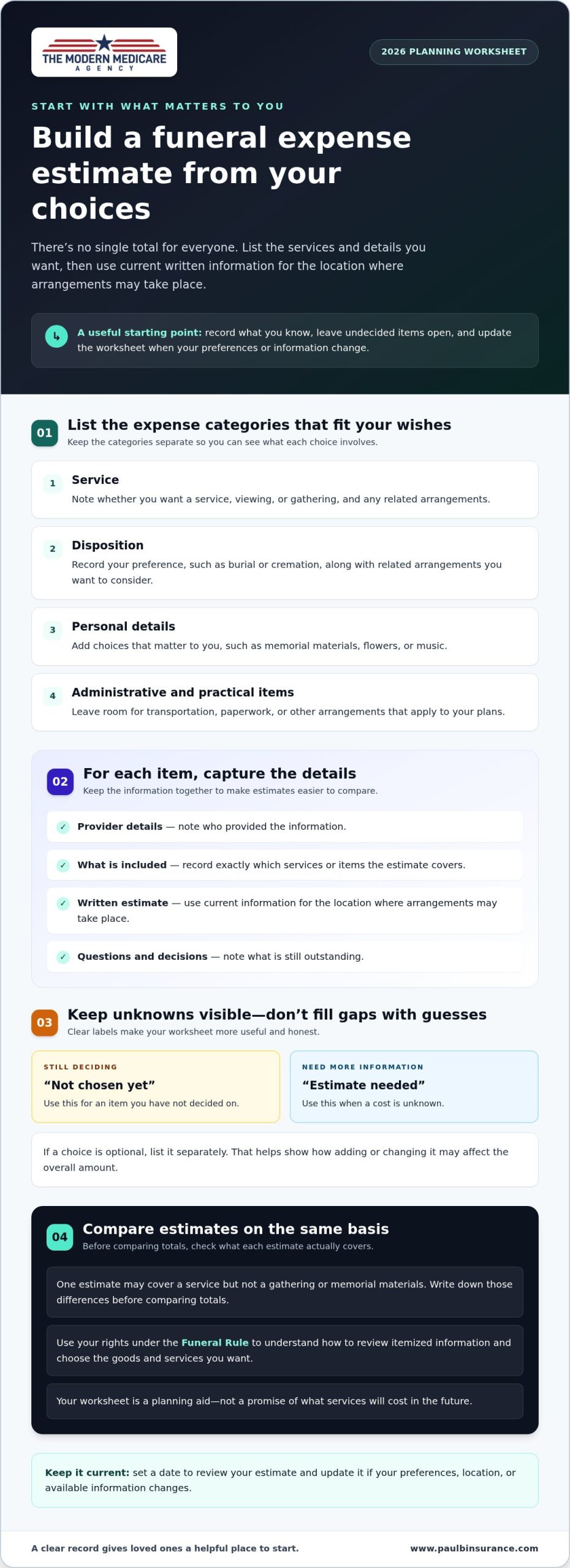
Once you’ve recorded your preferences, turn them into an itemized worksheet. This helps you see which choices may affect the amount your family needs to prepare, without relying on a national average or guessing at future prices. In 2026, use current written information for the location where arrangements are likely to take place. Local services and personal choices can change the estimate.
What expense categories belong on a planning worksheet?
Keep the main categories separate so it’s easier to see what each choice involves. Add only the items that fit your wishes:
- Service: Note whether you want a service, viewing, or gathering, and any related arrangements.
- Disposition: Record your preference, such as burial or cremation, along with related arrangements you want to consider.
- Personal details: Include choices such as memorial materials, flowers, or music if they matter to you.
- Administrative and practical items: Leave room for transportation, paperwork, or other arrangements that apply to your plans.
For each item, record the provider’s details, what is included, the written estimate, and any questions or decisions still outstanding. Keeping these details together makes it easier to compare estimates on the same basis. You can use your rights under the Funeral Rule to understand how to review itemized information and choose the goods and services you want.
How do you make an estimate useful without guessing?
Use current written estimates for the relevant location rather than assuming a national figure will match your plans. As you gather them, record exactly what each one includes. One estimate might cover a service but not a gathering or memorial materials, so note those differences before comparing totals.
Mark undecided items as “not chosen yet” and unknown costs as “estimate needed.” That’s more useful than filling gaps with assumptions. If a choice is optional, list it separately so you can see how adding or changing it may affect the overall amount. Your worksheet is a planning aid, not a promise of what services will cost in the future.
Set a date to review the estimate and update it if your preferences, location, or available information changes. A simple, current record supports the broader process of how to plan for funeral expenses without requiring you to settle every decision now. If you’re considering insurance as one part of your preparation, personal insurance guidance can help you explore that option alongside the rest of your plan.
Compare ways to prepare for funeral expenses without assuming insurance is the answer
There’s more than one way to prepare. As you decide how to plan for funeral expenses, compare options by considering how funds may be accessed, how much flexibility you want, and what records your loved ones will need. In 2026, the right approach depends on your circumstances and the specific terms of any arrangement or policy. You can combine approaches instead of relying on one source.
How do savings and advance arrangements differ from insurance?
Savings are personal funds, while an insurance benefit depends on an active policy and its terms. Advance arrangements involve making decisions ahead of time; what they cover and how they work depends on the arrangement. For each option, consider where the documents are kept, who can access the funds or information, and who may need to take action. The FTC explains your rights under the Funeral Rule, including how to review itemized information when considering services.
| Option | Purpose and access | Flexibility and details to review |
|---|---|---|
| Personal savings | Sets aside your own funds. Access depends on how accounts are held and who can act. | Consider how the money will be identified and made accessible to the appropriate person. |
| Insurance | May provide a benefit under an active policy. | Review the policy terms, eligibility, exclusions, benefit details, and who receives the benefit. |
| Advance arrangements | Records decisions made ahead of time. | Understand the specific arrangement, its terms, and how your plans can be changed or used. |
What should you understand before considering final expense insurance?
Final expense insurance is one possible funding tool, not a guarantee that every funeral-related expense will be covered. Terms, eligibility, exclusions, and benefit details vary by policy. Read the policy documents carefully, note who receives any benefit, and understand how the policy’s provisions apply. Don’t assume that a benefit is automatic or available immediately.
The Modern Medicare Agency offers final expense and life insurance, with personalized guidance for people considering how insurance might fit into a wider plan. A conversation can help you understand policy details alongside savings or advance arrangements, without treating insurance as the only answer. Whatever you choose, keep the relevant records clear and accessible to someone you trust.
Put your funeral expense plan into action and make it easy to find
A plan only helps your loved ones if they can find it and understand what it says. In 2026, turn your notes and estimates into a short written summary. Keep it practical: record the preferences you’ve decided on, the choices still open, and where supporting documents are stored. You don’t need to include every private detail in the summary itself.
What information should you record and share?
Include the details someone may need to follow your wishes or locate relevant records:
- Your service and disposition preferences, including any choices that remain undecided.
- Where your estimate came from, what it covers, and when you last reviewed it.
- Relevant insurance documents and where the original policy papers are kept.
- Contact details for people or providers connected to the arrangements.
- Where other important documents are stored and who should be informed.
Keep sensitive financial or medical information in a secure place rather than posting it in an unsecured shared folder or leaving it where anyone can access it. Tell an appropriate trusted person where the plan and original documents are kept, and how to reach them when needed.
How can you discuss the plan with family?
Choose a calm time, then explain why you’re bringing it up. You might say, “I’d like to share a few preferences so you won’t have to guess later.” Share the plan with the people most likely to carry out or communicate your wishes. Invite questions, and point out which decisions you’ve made and which you’re still considering.
Review the plan after a major life change, such as a move or a change in family circumstances. Check that contact details, document locations, and information connected to your arrangements are still current. A brief review can keep the plan useful without requiring you to start over.
This is practical preparation to help organize your wishes and records. It isn’t legal, tax, or financial planning advice, and a written summary may not replace documents that have their own requirements. If you’re considering insurance as part of how to plan for funeral expenses, you can explore final expense insurance guidance and how it may fit into your broader preparations.
Consider final expense insurance as one part of a wider plan
A steady plan comes together in stages. First, define your wishes. Then gather written estimates, compare ways to prepare, and document your decisions so the right people can find them. In 2026, final expense insurance may be one option to consider, but it isn’t a required step or a substitute for understanding your full plan. Let your preferences, resources, and family circumstances guide your choices.
When might it make sense to explore final expense insurance?
You might explore it if you’re considering how your existing resources could support your wishes or help loved ones manage future expenses. Start with your estimate and what you’ve already set aside, then consider whether insurance belongs alongside those resources. Review the policy’s terms, including coverage details and exclusions, and think about how any benefit fits into the broader plan. The right approach depends on your circumstances and the specific policy.
Keep the purpose clear: insurance is a possible funding tool, not a promise that every expense will be covered or that funds will be available in every situation. Policy terms differ, so understand the details before deciding whether this option fits. You can keep savings, insurance, or advance arrangements as separate parts of your plan, and note what each is intended to do.
What is a calm next step if you want personal guidance?
If you’d like help understanding insurance, bring your questions and the notes you’ve already gathered to a conversation. An independent insurance brokerage can offer personalized guidance as you consider final expense or life insurance in the context of your wider preparations. You don’t need to arrive with every decision settled, and exploring the option doesn’t mean you must buy a policy.
The Modern Medicare Agency offers guidance on final expense and life insurance for people weighing whether coverage may fit their plans. A useful conversation can focus on what you hope to prepare for, what resources you already have, and which policy terms you want clarified. Take the time you need. Your plan should reflect your priorities, not pressure you into a choice.
Planning can start with a few clear notes and grow as you learn more. By defining your wishes, gathering estimates, comparing options, and sharing the key details, you give loved ones a practical place to begin. If insurance is one question you’d like to explore, consider reaching out for personalized guidance. It’s an optional next step, and your broader plan remains yours to shape.
Take one small step toward a clearer plan
Planning doesn’t mean you need to decide everything today. Start with the wishes you know, gather current estimates for the arrangements you’re considering, and compare ways to prepare based on your needs. Then write down the key details and make sure someone you trust knows where to find them. That’s a practical way to approach how to plan for funeral expenses without expecting one solution to cover every possibility.
If insurance is one option you’d like to understand, The Modern Medicare Agency is an independent brokerage offering final expense and life insurance with personalized guidance. Bring your questions and the plan you’ve started, then explore how insurance might fit alongside your other preparations. There’s no need to have every answer before you begin.
Explore personalized insurance guidance at your own pace. A few thoughtful steps today can help make your wishes clearer and give your loved ones a more reassuring place to start.
Frequently Asked Questions
How do I start planning for funeral expenses?
Start by writing down the kind of service and arrangements that feel right to you. Then gather current written information for your location, list possible funding sources, and note where important documents are kept. Share the essentials with someone you trust. Learning how to plan for funeral expenses doesn’t mean settling every detail now. A short, clear plan gives you a useful starting point and can be updated as your wishes or circumstances change.
What expenses should I include when planning a funeral?
Include the arrangements that match your wishes, such as the service, burial or cremation, transportation, and personal or memorial choices you want to consider. Request current written details for your location, since what’s included can differ. Keep optional items separate from your main preferences so you can see which choices are still open. Treat estimates as planning aids, not guaranteed future totals, and review them as your plans develop.
Can I plan for funeral expenses without buying insurance?
Yes. Insurance is one possible way to prepare, but you can also consider personal savings, advance arrangements, or a combination of approaches. The right fit depends on your circumstances, access to funds, preferences, and any agreement or policy terms. Record what you decide and where the related documents are kept. Make sure a trusted person knows how to find that information, so your plan remains useful to the people who may need it.
Is final expense insurance the same as a funeral plan?
Not necessarily. Final expense insurance is an insurance policy, and its benefits and conditions depend on the policy documents. A funeral plan or advance arrangement may describe decisions or services arranged ahead of time. Names and details can vary, so read the relevant documents to understand what’s provided, how funds may be used, and what terms apply. Don’t assume every arrangement works the same way or covers every expense.
How can I estimate funeral expenses without knowing future prices?
Build a working estimate from current written information for your location and the choices you’re considering. Record what each estimate includes, and list undecided items separately rather than guessing. Today’s information can help you prepare, but it can’t guarantee what arrangements will cost in the future. Set a reminder to review your notes and update them when your preferences or circumstances change. This keeps your estimate useful without treating it as an exact future total.
Should I tell my family about my funeral expense plan?
Sharing the essentials can reduce uncertainty for people who may need to communicate or carry out your wishes. Choose a calm time to explain your preferences, where related documents are stored, and whom to contact. You don’t have to discuss every detail at once. Share sensitive information thoughtfully and securely. If your wishes, family circumstances, or arrangements change, revisit the conversation and update the people who need to know.
What documents should I keep with my funeral expense plan?
Keep a clear record of your wishes, current estimates or advance arrangement details, relevant insurance documents, and useful contact information. Note where original documents are stored, then tell an appropriate trusted person how to access them. Protect private information instead of leaving it somewhere unsecured. Review the records from time to time, especially after a move or other major change, so names, contact details, and document locations remain current.

Article by
Paul Barrett
Paul Barrett, CMIP is the founder of The Modern Medicare Agency, an independent Medicare-only brokerage based in Melville, NY. With 18 years of Medicare-exclusive experience, a CMIP designation, and more than 5,000 clients served across 37 states, Paul is one of the most credentialed independent Medicare specialists on Long Island — and one of the most direct.
He represents 40+ carriers with no quotas and no allegiances, which means his recommendations are based entirely on what fits each client's specific situation. He is the author of Medicare Mastery Unlocked and host of the Wise Guys Retirement Talk podcast. His content is grounded in primary sources, real carrier intelligence, and 18 years of watching what happens when people get Medicare right — and when they don't.
📞 631-358-5793 | paulbinsurance.com