




What if a life insurance benefit could help your grandchildren when they need it most? The idea can be comforting, but deciding whether a policy fits your legacy goal raises practical questions. Who will receive the benefit, how will it be managed, and does term or permanent coverage better match your timeline? If you’re considering using life insurance to leave an inheritance, it helps to understand how beneficiary designations and policy terms work before making a decision.
A life insurance benefit is generally paid to the person named as the beneficiary after the insurer reviews a claim. That makes choosing the right beneficiaries and keeping their details current important parts of your plan. If a grandchild is a minor, consider in advance how the benefit could be managed for them.
This 2026 guide explains how a payout reaches a beneficiary, compares term and permanent policies, and outlines questions to raise with qualified legal or tax professionals. The Modern Medicare Agency offers life insurance and personalized guidance, so you can explore coverage options while keeping your family’s goals in view.
Key Takeaways
- Using life insurance to leave an inheritance can provide a benefit for grandchildren, but the outcome depends on the policy terms and your choices.
- Understand the basic steps beneficiaries take to receive a benefit, and keep their details current.
- Compare term and permanent coverage based on how long you want protection to last and what uncertainties each option involves.
- Clarify what you want the inheritance to accomplish, consider each grandchild’s circumstances, and decide whether direct access to funds makes sense.
- Review your goal and existing coverage in 2026, then read the policy terms carefully before deciding what to do next.
Life insurance for inheritance: what it can and cannot do
A life insurance inheritance is a possible benefit paid to the policy’s named beneficiary after the insured person dies. The amount and timing depend on the policy’s terms, whether coverage is active, and the claim review process. Life insurance can be one way to provide for loved ones, but it isn’t a universal fit or a guaranteed result.
A death benefit is money a policy may pay after the insured person dies; a lifetime gift is money given while they’re alive. That distinction matters when using life insurance to leave an inheritance. A death benefit is tied to the policy and its conditions, while a lifetime gift comes from resources the giver chooses to transfer during life. Life insurance comes in different forms, so start by understanding the policy you’re considering.
When might a life insurance benefit support grandchildren?
A grandparent might hope to help grandchildren with future needs, such as education, starting a household, or other milestones. That goal differs from replacing income for family members who depend on the grandparent financially today. Consider the intended purpose, recipients, and timing when deciding whether coverage fits.
Think about each grandchild’s age and circumstances. A benefit intended for a young child raises different questions from one meant for an adult who can manage funds independently. Consider your own timeline and resources, too: the premium commitment needs to fit alongside current needs and other priorities. If you want to treat grandchildren equally, decide how you’ll define equal shares and whether that approach fits your family’s circumstances.
What life insurance cannot promise
No policy should be treated as a guaranteed inheritance. Eligibility, premiums, coverage, and benefit terms depend on the specific policy, and coverage needs to remain active according to its requirements. Review the policy language to understand what you must do to maintain coverage and what could affect the benefit.
Tax treatment depends on the circumstances, so don’t assume every payout is automatically tax-free. Ask a qualified tax professional about your situation. A policy also doesn’t replace a will or answer every question about how your assets should be handled. Legal and tax questions call for qualified professional advice; life insurance is one part of a broader family plan.
Your legacy goal should fit the people you hope to help and the resources you can reasonably commit. Health coverage is a separate part of later-life planning; the Medicare Advantage guide explains that topic. Keeping these decisions distinct can help you focus on what each is meant to do.
How life insurance beneficiaries receive an inheritance
A beneficiary designation connects a policy to the person or arrangement intended to receive its benefit. The beneficiary named in the policy is generally the person or entity the insurer looks to when a claim is made. Clear, current information can help prevent confusion, especially as family circumstances change.
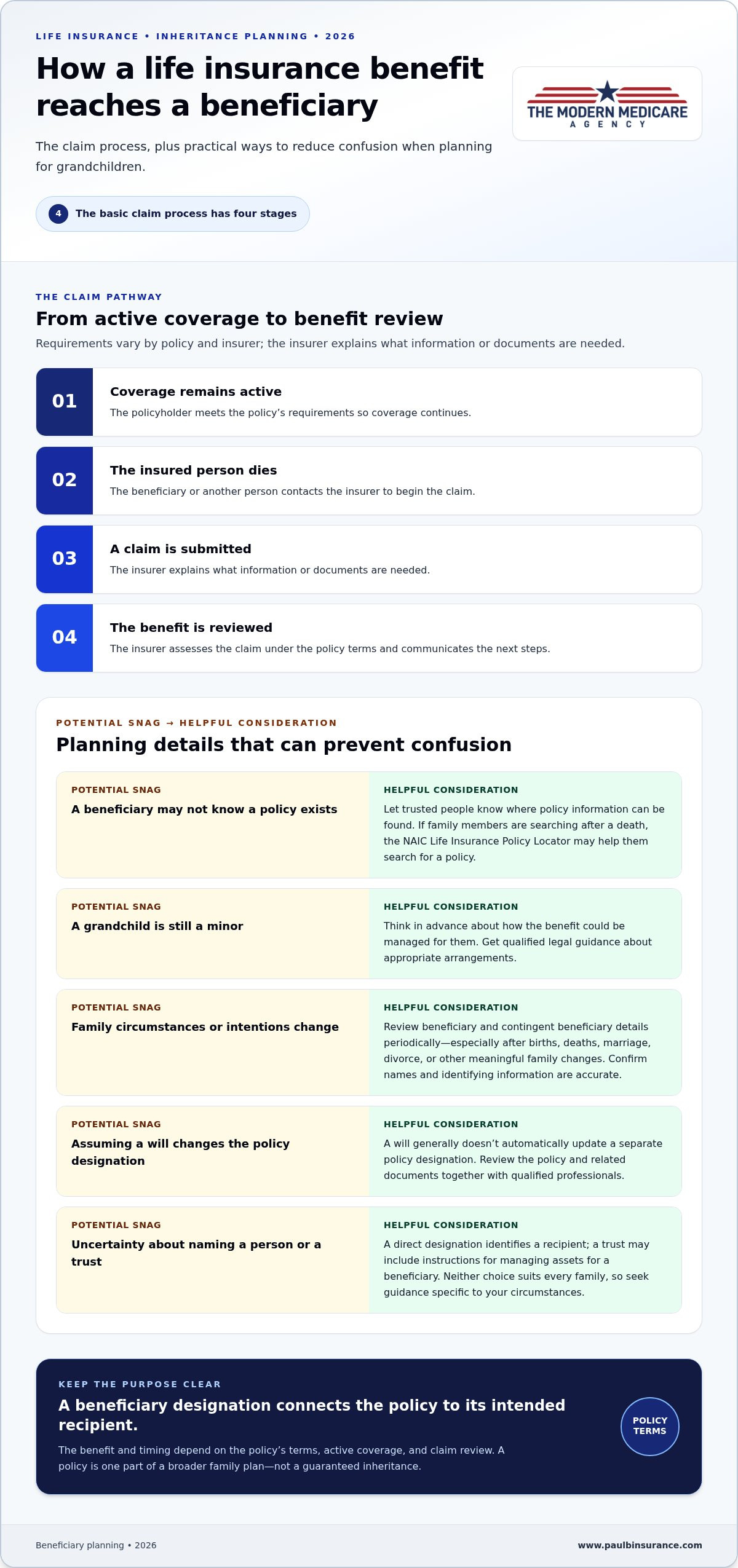
In 2026, the basic process usually follows these steps, though the specific claim requirements depend on the policy and insurer:
- Coverage remains active. The policyholder meets the policy’s requirements so coverage continues.
- The insured person dies. The beneficiary or another person contacts the insurer to begin the claim.
- A claim is submitted. The insurer explains what information or documents are needed.
- The benefit is reviewed. The insurer assesses the claim under the policy terms and communicates the next steps.
A beneficiary who doesn’t know a policy exists may not know to start a claim. If family members are trying to locate coverage after a death, the NAIC Life Insurance Policy Locator may help them search for a policy. Make sure trusted people know where policy information can be found.
Naming a grandchild as beneficiary
Name beneficiaries through the insurer’s process, then review those details periodically. If a grandchild is still a minor, consider how the benefit could be managed for them and get qualified legal guidance about appropriate arrangements. Review contingent beneficiaries as well, and revisit designations after births, deaths, marriage, divorce, or other meaningful family changes.
Small details matter. Confirm that names and other identifying information are accurate, and check that the designation reflects your current intentions. A will generally doesn’t automatically update a separate policy designation. Review the policy and related documents together with qualified professionals.
When a trust may be part of the conversation
Naming a person directly and naming a trust are different ways of directing a benefit. A trust may include instructions for managing assets for a beneficiary, while a direct designation identifies the recipient. Neither choice suits every family. A special needs trust raises more complex questions, so seek tailored guidance from qualified legal and tax professionals.
Trust arrangements can have legal, tax, or benefit-related implications that depend on individual circumstances. Don’t assume a particular outcome without advice specific to your family and current 2026 rules. The goal is to understand how the policy designation works alongside any trust documents, not to treat a general explanation as a substitute for professional advice.
Clear beneficiary choices can make your intention easier to understand, but they don’t remove the need to review policy terms and keep records accessible. If you’re considering coverage as part of a family legacy, you can explore life insurance options as you weigh your next steps.
Term or permanent life insurance: which fits an inheritance goal?
The main difference is how long coverage is designed to last. Term life insurance covers a defined period, while permanent life insurance is designed for longer-term coverage and may continue for life if policy requirements are met. Neither type guarantees that a benefit will be available for a particular family milestone. The right fit depends on your timeline, the policy terms, and whether you can maintain the coverage.
Use this comparison as a starting point in 2026, not as a recommendation. “Common purpose” describes a possible use, not a promise about how a policy will perform.
| Policy type | Intended duration | Possible inheritance purpose | Key uncertainty |
|---|---|---|---|
| Term | A defined period | Coverage for a goal connected to a particular stage or timeframe | The coverage period may end before the inheritance is needed |
| Permanent | Longer-term coverage, designed to continue for life when requirements are met | A legacy goal intended to remain in place over a longer horizon | Ongoing policy requirements and terms affect whether coverage continues |
When time-limited coverage may match the goal
Term coverage may be worth considering if your intention is tied to a defined period. For example, you may want potential coverage while grandchildren are young or while a family member relies on your support. That doesn’t make term coverage right for every grandparent. Ask whether your inheritance goal has a clear endpoint or could remain important beyond the selected coverage period.
The main mismatch to watch for is straightforward: if coverage ends before the intended inheritance is needed, the policy may no longer serve that goal. Compare the coverage period with your personal timeline, and read what the policy says about when protection begins and ends. Don’t assume you’ll be able to extend or replace coverage on the same terms later.
When lifetime coverage deserves closer consideration
Permanent coverage is designed for longer-term protection and may continue for life when its requirements are met. That design may be worth considering if your legacy intention isn’t tied to a specific end date. But “permanent” doesn’t mean you can ignore the policy: its structure, terms, and ongoing obligations vary, and continued coverage depends on meeting them.
Before deciding, consider whether the ongoing commitment fits your longer-term budget and other family needs. The Modern Medicare Agency provides life insurance guidance to help you understand policy terms and consider coverage options in light of your needs. Start with a clear question: do you want coverage for a defined chapter, or are you considering a longer-lasting legacy goal? That distinction can make using life insurance to leave an inheritance easier to evaluate without assuming one policy type is always the better choice.
Plan an inheritance for grandchildren without overlooking family needs
A thoughtful inheritance plan starts with what you want the money to do. You might hope to give each grandchild an equal share, help one with a particular need, or provide support another way. There’s no single approach that suits every family. Your intention, each grandchild’s circumstances, and your own resources can guide the conversation.
Using life insurance to leave an inheritance also means thinking beyond who is named on the policy. Consider whether each grandchild could manage a benefit directly and whether your beneficiary choices work alongside the rest of your estate plan. Clear planning can reduce the chance that a well-meant decision creates confusion for your family later.
Questions to consider before choosing beneficiaries
Before setting or changing beneficiary details, consider what feels fair and practical. Equal shares may reflect one family’s intention; another family may have reasons to provide different support. Make a deliberate choice rather than letting an outdated form decide by default.
- Who should receive a benefit? List the people you intend to include, and consider whether you want shares to be equal or intentionally different.
- What might their circumstances mean? A grandchild’s age, ability to manage money, or support needs could affect whether direct access makes sense.
- Who could manage the funds if needed? Identify the question, then discuss suitable arrangements with a qualified legal professional rather than assuming a particular person or structure is appropriate.
You don’t need to predict exactly how a grandchild’s life will unfold to consider these questions. They can help you see where a direct benefit may be straightforward and where additional guidance could help protect your intention.
Keep policy details aligned with the wider plan
Revisit your beneficiary choices after a birth, death, major relationship change, or shift in what you hope to provide. Review the policy form alongside your estate documents, not in isolation. They serve different purposes, and keeping them consistent with your current intentions can help avoid mixed messages.
Family communication can help, too. You may choose to explain the purpose behind your decisions to the people who could be affected. A conversation can clarify your intentions, though it doesn’t replace reviewing the actual policy and documents.
Tax treatment, trust arrangements, and possible effects on government benefits depend on individual circumstances. In 2026, have qualified legal and tax professionals review those questions before relying on an assumed outcome. This is general education, not a legal or tax conclusion. If you’re weighing coverage as part of your family’s plans, explore life insurance options and consider how they fit the goal you’ve identified.
Your next steps for using life insurance to leave an inheritance
You don’t have to settle every detail at once. In 2026, a thoughtful review can help you see whether life insurance fits your intention, what decisions remain, and which questions call for professional guidance. Start with your goal, then review your current coverage and the people you hope to support.
A simple review process before deciding
Gather your policy documents and make a short note of what you want the inheritance to accomplish. Then work through these steps:
- Define your intention. Write down who you hope to benefit, why, and when you hope support may be needed. You might want to provide a general legacy or help with a particular future need.
- Review existing coverage. Gather current policy information. Note the coverage amount, the terms that affect how long it remains active, any ongoing requirements, and the people or arrangements currently named as beneficiaries.
- Compare policy types. Consider whether a defined coverage period or longer-term coverage better matches your timeline. Read the policy terms rather than relying on a general description of term or permanent insurance.
- Revisit the recipients. Check that beneficiary choices reflect your current wishes, including any contingent beneficiaries. Consider whether a grandchild’s age or circumstances raise questions about how funds would be managed.
As you review, list anything you don’t understand. Ask how the policy works if coverage ends, what you need to do to keep it active, and what circumstances could affect the benefit. Clear answers can help you compare options thoughtfully without assuming a policy will deliver a particular outcome.
Explore life insurance options with personal guidance
An insurance conversation can help you understand coverage options and policy language in plain terms. Bring notes about the intended recipients, purpose, and timeline. You can then discuss how different choices relate to your insurance needs and what ongoing requirements each policy may involve. The Modern Medicare Agency offers life insurance and personalized guidance to help you consider your options.
Some questions need a different kind of expertise. For personalized guidance about wills, trusts, estate documents, tax treatment, or possible effects on government benefits, speak with qualified legal or tax professionals. Those questions depend on your circumstances and current 2026 rules. Keep the roles clear: insurance guidance can help you understand coverage, but it isn’t a substitute for legal, tax, or financial-planning advice.
Taking these steps doesn’t commit you to buying a policy. It gives you a clearer basis for deciding whether coverage belongs in your family’s plans. If you’re ready to explore insurance choices, explore life insurance options at your own pace.
Take the next step at your own pace
A family legacy doesn’t have to be settled in one sitting. Start by writing down what you hope your grandchildren will understand about your intentions, not just what you hope they may receive. That reflection can help you have a thoughtful family conversation and decide which questions deserve attention first.
In 2026, using life insurance to leave an inheritance is one option to explore, not a commitment you need to make before you feel ready. Give yourself room to compare coverage choices, understand the responsibilities involved, and seek qualified legal or tax guidance for questions beyond insurance. Your next step can be small: gather your thoughts, review your options, or talk through what different types of coverage may mean for your goals.
If you’d like to explore life insurance coverage with personal guidance, explore life insurance options with The Modern Medicare Agency. You can move forward at a pace that feels right for you and your family.
Frequently Asked Questions
Can I name my grandchild as the beneficiary of my life insurance policy?
Yes, you can generally name a grandchild, subject to the insurer’s process and the policy’s terms. Use the insurer’s beneficiary form and provide enough detail to identify the intended person. If you have several grandchildren, consider whether to name each one and how the benefit should be divided. Keep a copy of the confirmation with your policy records, and review it if your family circumstances change.
Is life insurance a good way to leave money to grandchildren?
It may suit some family goals, but it isn’t automatically the right choice for everyone. Consider whether the coverage aligns with your timeline, budget, and other priorities, and whether you could maintain it as required. Compare the policy’s intended benefit with other ways you hope to support your grandchildren. Using life insurance to leave an inheritance is a decision to weigh against your own needs and circumstances.
What happens if my grandchild is a minor when the life insurance benefit is paid?
If the named beneficiary is a minor, the insurer may need additional instructions or documentation before the benefit can be managed for that child. The process depends on the policy and applicable rules. Before naming a young grandchild, ask a qualified legal professional how funds could be handled and who may manage them. Don’t assume a parent or guardian will automatically receive or control the benefit just because they care for the child.
Are life insurance proceeds taxable when left to a grandchild?
Tax treatment depends on the policy, how it is owned, and the family’s circumstances, so don’t assume every benefit is tax-free or taxable. A beneficiary receiving proceeds and a policy being considered as part of an estate can raise different questions. For a decision made in 2026, ask a qualified tax professional to review the specific facts and current rules before relying on a general answer.
How do term and permanent life insurance differ for leaving an inheritance?
Term coverage is designed to last for a stated period, while permanent coverage is designed for longer-term protection, subject to policy requirements. A goal tied to a particular family stage may call for a different timeline than one intended to remain in place over the long term. Compare the policy’s duration, ongoing requirements, and terms with your intention rather than assuming either type will fit every inheritance plan.
What happens if I forget to update my life insurance beneficiary?
The insurer will generally use the beneficiary information on file when processing a claim, subject to policy terms and applicable rules. That may not match your current intention if there has been a birth, death, divorce, or other family change. Set a recurring reminder to review the designation alongside your policy records. If it needs changing, follow the insurer’s process and keep confirmation of the completed update.
Can life insurance help provide for a grandchild with a disability?
It may be one part of providing for a grandchild, but the beneficiary arrangement deserves careful review. A direct payment could interact with the grandchild’s individual circumstances, including any government benefits they receive. Don’t assume a particular arrangement will protect benefit eligibility. A qualified attorney familiar with the grandchild’s needs, along with a tax professional where relevant, can explain options such as a trust and assess the specific 2026 implications.

Article by
Paul Barrett
Paul Barrett, CMIP is the founder of The Modern Medicare Agency, an independent Medicare-only brokerage based in Melville, NY. With 18 years of Medicare-exclusive experience, a CMIP designation, and more than 5,000 clients served across 37 states, Paul is one of the most credentialed independent Medicare specialists on Long Island — and one of the most direct.
He represents 40+ carriers with no quotas and no allegiances, which means his recommendations are based entirely on what fits each client's specific situation. He is the author of Medicare Mastery Unlocked and host of the Wise Guys Retirement Talk podcast. His content is grounded in primary sources, real carrier intelligence, and 18 years of watching what happens when people get Medicare right — and when they don't.
📞 631-358-5793 | paulbinsurance.com